Infinity Services LLC

About Infinity Services LLC

This author has not yet filled in any details.
So far Infinity Services LLC has created 18 blog entries.

Arctic Weather Alert- HCMUD 358

Wind has a major impact on whether exposed pipes freeze, even when the air temperature alone might seem marginal. Here’s how it works in practical terms:

1. Wind accelerates heat loss (wind chill effect)

  • Wind strips away the thin layer of warmer air that naturally surrounds a pipe.
  • This increases convective heat transfer, causing the pipe to lose heat much faster.
  • Even though wind chills don’t lower the actual air temperature, it lowers the effective temperature of the pipe surface, making freezing more likely.

Example: At 28°F (−2°C) with strong wind, an exposed pipe can cool as fast as it would in much colder, calm conditions.

2. Pipes freeze faster in windy conditions

  • In still air, pipes may retain some heat from:
  • Residual warm water inside
  • Heat leaking from nearby buildings or the ground
  • Wind removes that heat continuously, allowing the pipe temperature to drop below 32°F (0°C) more quickly.

This is why pipes often freeze:

  • On north-facing or windward sides of buildings
  • In crawlspaces, attics, or under homes with air infiltration
  • On bridges or elevated structures

3. Wind defeats insulation if it’s not sealed

  • Insulation works by trapping air.
  • Wind penetrating gaps or poorly sealed insulation nullifies its effectiveness.
  • Even insulated pipes can freeze if wind is allowed to blow through or behind the insulation.

Key point: Insulation must be continuous, sealed, and wind-blocked to be effective.

4. Evaporative cooling can worsen freezing

  • If moisture is present (rain, melting snow, condensation), wind speeds up evaporation.
  • Evaporation pulls additional heat from the pipe, lowering its temperature further.
  • This is especially dangerous around outdoor faucets and irrigation lines.

5. Why moving water helps—but wind can still win

  • Flowing water resists freezing because it brings in heat from upstream.
  • However, in strong wind and prolonged cold:
  • Slow trickles may not provide enough heat
  • Small-diameter pipes can still freeze

Practical mitigation strategies

To reduce wind-related freezing risk:

  • Block wind exposure (plywood shields, skirting, or wind barriers)
  • Seal insulation with tape or vapor barrier
  • Use heat tape rated for outdoor use
  • Enclose pipes where possible

Bottom line
Wind dramatically increases the freezing risk of exposed pipes by accelerating heat loss. In freezing weather, a windy 28°F night can be far more dangerous to pipes than a calm 20°F night.

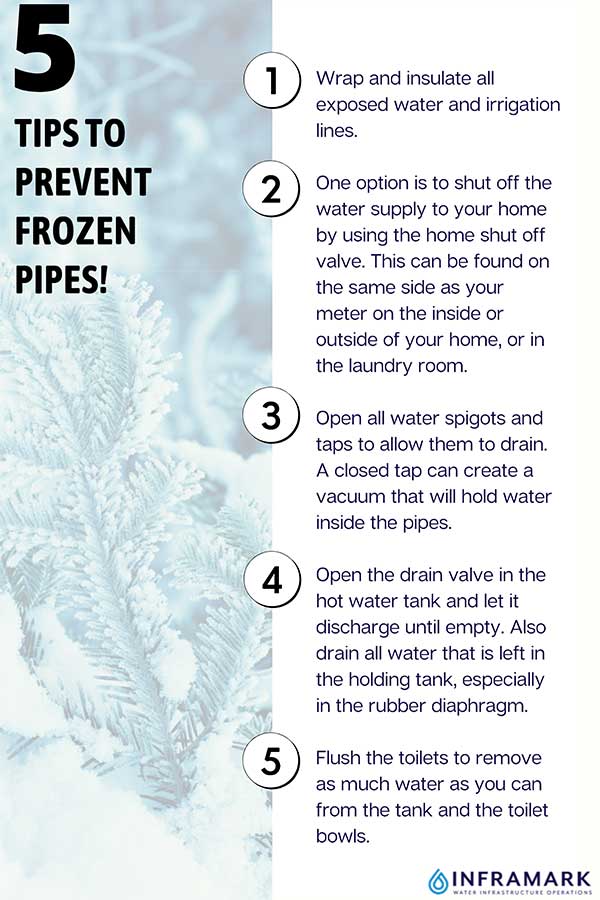
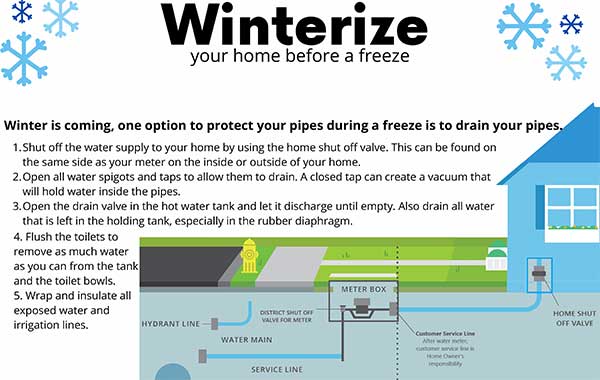
There are several effective methods to keep your exposed pipes from freezing. Here are some of the most common ones:
1. Insulation:

  • Use foam pipe insulation, heat tape, or heat cable to wrap pipes.
  • Make sure to cover all joints and bends thoroughly.

2. Enclosures and Barriers: Build insulated boxes or enclosures around vulnerable pipes.

  • Use plywood or other wind barriers to block strong gusts.

3. Sealing Gaps:

  • Seal any cracks, gaps, or openings in walls, floors, and foundations where cold air can seep in.

4. Heating Solutions:

  • Install a small space heater or heat lamp in areas with exposed pipes.
  • Use heat tape or cables that are thermostatically controlled to maintain a safe temperature.

5. Keeping Indoor Temperatures Consistent:

  • Maintain consistent heat in areas where pipes are exposed, such as attics, basements, or crawl spaces.

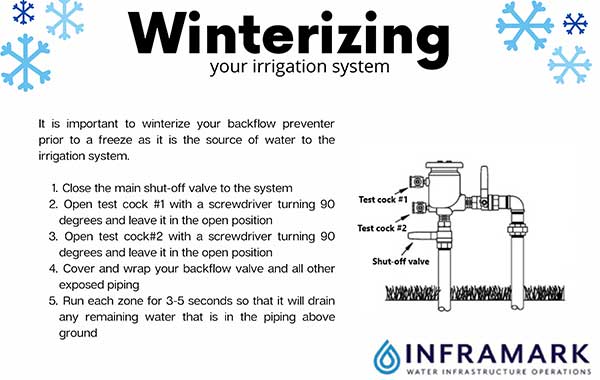
6. Disconnecting and Draining:

  • For outdoor hoses and sprinkler systems, disconnect and drain them before freezing weather sets in.

7. Using Outdoor Faucet Covers:

  • Install insulated covers over outdoor faucets to help protect them from the cold.

By combining several of these methods, you can significantly reduce the risk of frozen pipes. If you need more details on any of them, just let me know!

As a reminder from Winter Storm Uri, Senate Bill 3 was passed in 2021 which prevents penalties and water service terminations during an “extreme weather emergency.” This is defined as a period when the previous day’s highest temperature and the predicted temperature for the next 24 hours are both no higher than 28 degrees Fahrenheit.

If you have any issues, please contact Inframark at 832-467-1599

By |2026-01-22T17:29:24-06:00January 21st, 2026|HCMUD 358|

Arctic Weather Alert

Wind has a major impact on whether exposed pipes freeze, even when the air temperature alone might seem marginal. Here’s how it works in practical terms:

1. Wind accelerates heat loss (wind chill effect)

  • Wind strips away the thin layer of warmer air that naturally surrounds a pipe.
  • This increases convective heat transfer, causing the pipe to lose heat much faster.
  • Even though wind chills don’t lower the actual air temperature, it lowers the effective temperature of the pipe surface, making freezing more likely.

Example: At 28°F (−2°C) with strong wind, an exposed pipe can cool as fast as it would in much colder, calm conditions.

2. Pipes freeze faster in windy conditions

  • In still air, pipes may retain some heat from:
  • Residual warm water inside
  • Heat leaking from nearby buildings or the ground
  • Wind removes that heat continuously, allowing the pipe temperature to drop below 32°F (0°C) more quickly.

This is why pipes often freeze:

  • On north-facing or windward sides of buildings
  • In crawlspaces, attics, or under homes with air infiltration
  • On bridges or elevated structures

3. Wind defeats insulation if it’s not sealed

  • Insulation works by trapping air.
  • Wind penetrating gaps or poorly sealed insulation nullifies its effectiveness.
  • Even insulated pipes can freeze if wind is allowed to blow through or behind the insulation.

Key point: Insulation must be continuous, sealed, and wind-blocked to be effective.

4. Evaporative cooling can worsen freezing

  • If moisture is present (rain, melting snow, condensation), wind speeds up evaporation.
  • Evaporation pulls additional heat from the pipe, lowering its temperature further.
  • This is especially dangerous around outdoor faucets and irrigation lines.

5. Why moving water helps—but wind can still win

  • Flowing water resists freezing because it brings in heat from upstream.
  • However, in strong wind and prolonged cold:
  • Slow trickles may not provide enough heat
  • Small-diameter pipes can still freeze

Practical mitigation strategies

To reduce wind-related freezing risk:

  • Block wind exposure (plywood shields, skirting, or wind barriers)
  • Seal insulation with tape or vapor barrier
  • Use heat tape rated for outdoor use
  • Enclose pipes where possible

Bottom line
Wind dramatically increases the freezing risk of exposed pipes by accelerating heat loss. In freezing weather, a windy 28°F night can be far more dangerous to pipes than a calm 20°F night.

There are several effective methods to keep your exposed pipes from freezing. Here are some of the most common ones:
1. Insulation:

  • Use foam pipe insulation, heat tape, or heat cable to wrap pipes.
  • Make sure to cover all joints and bends thoroughly.

2. Enclosures and Barriers: Build insulated boxes or enclosures around vulnerable pipes.

  • Use plywood or other wind barriers to block strong gusts.

3. Sealing Gaps:

  • Seal any cracks, gaps, or openings in walls, floors, and foundations where cold air can seep in.

4. Heating Solutions:

  • Install a small space heater or heat lamp in areas with exposed pipes.
  • Use heat tape or cables that are thermostatically controlled to maintain a safe temperature.

5. Keeping Indoor Temperatures Consistent:

  • Maintain consistent heat in areas where pipes are exposed, such as attics, basements, or crawl spaces.

6. Disconnecting and Draining:

  • For outdoor hoses and sprinkler systems, disconnect and drain them before freezing weather sets in.

7. Using Outdoor Faucet Covers:

  • Install insulated covers over outdoor faucets to help protect them from the cold.

By combining several of these methods, you can significantly reduce the risk of frozen pipes. If you need more details on any of them, just let me know!

As a reminder from Winter Storm Uri, Senate Bill 3 was passed in 2021 which prevents penalties and water service terminations during an “extreme weather emergency.” This is defined as a period when the previous day’s highest temperature and the predicted temperature for the next 24 hours are both no higher than 28 degrees Fahrenheit.

If you have any issues, please contact Inframark at 832-467-1599

By |2026-01-22T17:29:08-06:00January 21st, 2026|Malcomson Road UD|

Important Notice About Your Water

Important Notice About Your Water
June 18,2025

Your water company, Harris County Utility District No. 14, will be changing the disinfectant that we use to treat the water from chlorine to chloramine in 2026. This change is necessary because of state requirements.

The change to chloramines can cause problems to persons dependent on dialysis machines. A condition known as hemolytic anemia can occur if the disinfectant is not completely removed from the water that is used for the dialysate. Consequently, the pretreatment scheme used for the dialysis units must include some means, such as a charcoal filter, for removing the chloramine. Medical facilities should also determine if additional precautions are required for other medical equipment.

In addition, chloraminated water may be toxic to fish. If you have a fish tank, please make sure that the chemicals and filters that you are using are designed for use in water that has been treated with chloramines.

We will notify you at least 14 days before changing the disinfectant. If you have any questions, please contact the engineer for Harris County Utility District No. 14, Mr. Eric Johnson with IDS Engineering Group, at 832-590-7224.


Aviso importante sobre su agua
18 de junio de 2025

Su compañía de agua, el Distrito de Servicios Públicos Nro. 14 del Condado de Harris, cambiará el desinfectante que utiliza para tratar el agua, pasando de cloro a cloramina en el año 2026. Este cambio es necesario debido a los requisitos estatales.

El cambio a cloraminas puede causar problemas a las personas que dependen de máquinas de diálisis. Una condición conocida como anemia hemolítica puede ocurrir si el desinfectante no se elimina completamente del agua que se utiliza para el dializado. En consecuencia, el esquema de tratamiento previo utilizado para las unidades de diálisis debe incluir algún medio, como un filtro de carbón activado, para eliminar la cloramina. Las instalaciones médicas también deben determinar si se requieren precauciones adicionales para otros equipos médicos.

Además, el agua con cloraminas puede ser tóxica para los peces. Si tiene un acuario, asegúrese de que los productos químicos y los filtros que utiliza estén diseñados para usarse en agua tratada con cloraminas.

Le notificaremos al menos 14 días antes de realizar el cambio de desinfectante. Si tiene alguna pregunta, comuníquese con el ingeniero del Distrito de Servicios Públicos Nro. 14 del Condado de Harris, el Sr. Eric Johnson, de IDS Engineering Group, llamando al 832-590-7224.

By |2025-06-16T12:47:10-05:00June 16th, 2025|HCUD 14|

Debris Dumping

With the wind storms and Hurricane Beryl that recently impacted our area, residents are dealing with storm debris.  MRUD has had to remove debris on the District’s Right-of-Way due to residents dumping trimmings and trash behind their fences, and in many cases close to the exercise trails.   Dumping on District property is trespassing and prohibited.  You may not be aware that MRUD has to pay to remove this debris to keep facilities safe, usable, and looking good.  All the residents in MRUD should not have to pay for the cost of the removal of debris from a few bad players that are acting irresponsibly.

Any debris which has been discarded on District property must be removed immediately (by September 9, 2024) to avoid charges to the resident. These charges will include all efforts to remove and haul off the debris and any cost to restore the area. We hope those that take advantage of our facilities will help us monitor for violations. If you see any debris on district right-of-way, please contact the operator at 832-467-1599. Thank you for your support and cooperation.

By |2025-05-05T12:51:27-05:00August 28th, 2024|Malcomson Road UD Archive|

NHCRWA terminated their Stage 2 water conservation measures

The North Harris County Regional Authority (NHCRWA) terminated their Stage 2 water conservation measures. However, Stage 1 voluntary remains in effect. Effective immediately, the following voluntary water use restrictions are in place:

Voluntary water use restrictions now in place:

  • Water customers are requested to voluntarily limit the irrigation of landscaped areas to Sundays and Thursdays for single-family residential customers with a street address ending in an even number (0, 2, 4, 6 or 8); Saturdays and Wednesdays for single-family residential customers with a street address ending in an odd number (1, 3, 5, 7 or 9); and Tuesdays and Fridays for all other customers and to irrigate landscapes only between the hours of 12:00 midnight and 5-00 am and 7-00 pm and 12:00 midnight on designated watering days.
  • Water customers are requested to practice water conservation and to minimize or discontinue water use for non-essential purposes.
  • Water Customers are requested to check for and repair all leaks, dripping faucets, and running toilets.

Thank you for your cooperation – Customers will be notified when these restrictions are no longer required or if conditions warrant additional conservation measures.

By |2023-12-04T09:14:50-06:00October 11th, 2023|Malcomson Road UD Archive|
Go to Top